
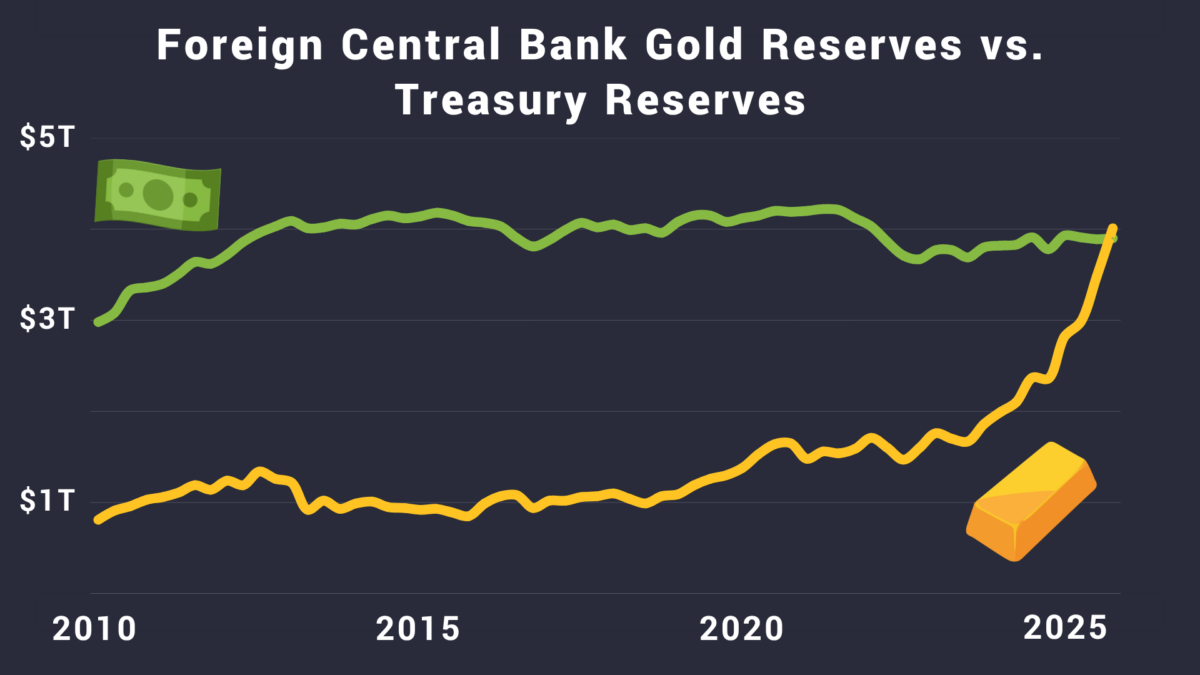
Central Bank Gold Reserves vs. Treasuries
For decades, U.S. Treasuries were the crown jewel of central bank reserves. Stable, liquid, and backed by the “full faith and credit” of the U.S. government.
Is that era fading?
In 2025, the market value of foreign official gold reserves overtook foreign official holdings of U.S. Treasuries.
Foreign Gold Holdings Just Overtook Treasury Holdings
This chart shows the total value of foreign treasury reserves vs. the total value of gold reserves held by foreign central banks since 2000:
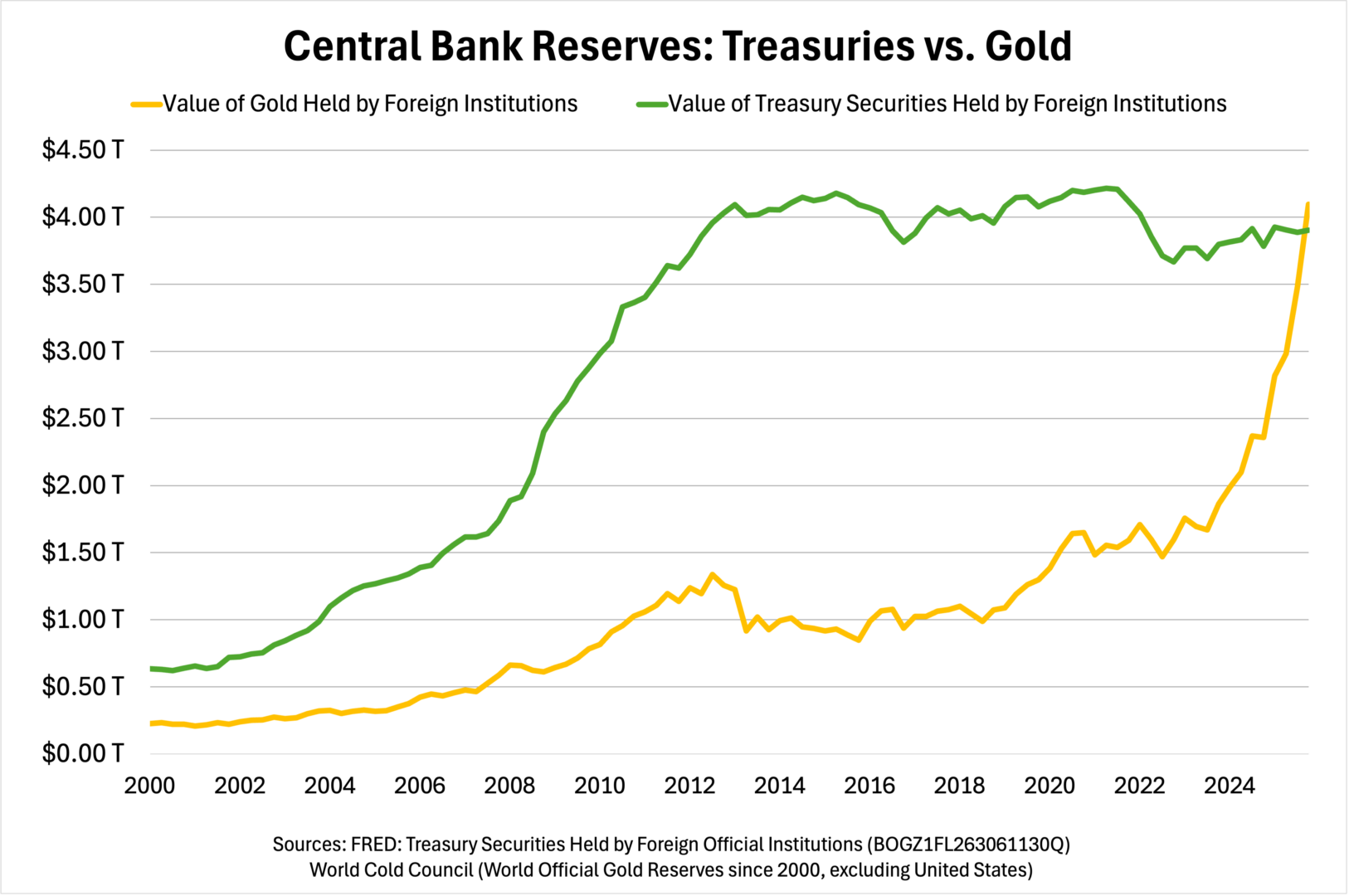
Foreign treasury holdings began to stagnate in 2013. In the 2010s, Treasuries made up more than 30% of central bank reserves. That number has now dropped to 23%.
Why Central Banks Are Choosing Gold Over Treasuries
According to the World Gold Council, central banks collectively own about 18% of all gold ever mined: 36,616 metric tons. Their gold is worth $5.4 trillion at today’s prices.
In each of the last four years, central banks have collectively purchased over 860 tonnes of gold (nearly double the annual average from the previous decade). The WGC reports that 76% of central banks expect gold’s share of global reserves to increase over the next five years, while 73% said they expect the dollar’s share to decline.
Here are the reasons:
- Post-pandemic inflation has eroded confidence in the long-term purchasing power of fiat currencies.
- U.S. fiscal health is deteriorating. Treasuries are still among the world’s most liquid reserve assets, but rising deficits are causing some buyers to worry about the United States’ ability to manage its debt.
- Governments prefer “neutral” assets to settle transactions between nations. Gold has no counterparty risk. Its markets are global, decentralized, and outside the control of any sovereign power.
- Treasuries are vulnerable to U.S. sanctions. BRICS nations want reserves that cannot be frozen or blocked by the U.S. government.
- Gold historically outperforms sovereign bonds and currencies during military conflicts and financial crises.
Simply put: Treasuries come with strings attached. Gold does not.
Why This Matters for Investors
Central banks don’t chase trends. When they move, they move deliberately, and usually for the long term. Their pivot toward gold signals a profound realignment in the global financial system. For individual investors, this shift reinforces gold’s role as:
- A store of value that outlasts political cycles
- A hedge against inflation and currency risk
- A counterbalance to both bonds and equities in a diversified portfolio
The fact that central banks now hold more gold than Treasuries is the clearest sign yet that trust in paper promises is waning. Unlike central banks, you don’t need a trillion-dollar balance sheet to start buying gold. With Vaulted, you can buy and hold physical gold with just a few taps. Login to your Vaulted Account
Sources
- Foreign official U.S. Treasury holdings are from the Federal Reserve’s Financial Accounts dataset: Treasury Securities Held by Foreign Official Institutions (BOGZ1FL263061130Q).
- Official gold reserves are from the World Gold Council’s central-bank holdings dataset.